

















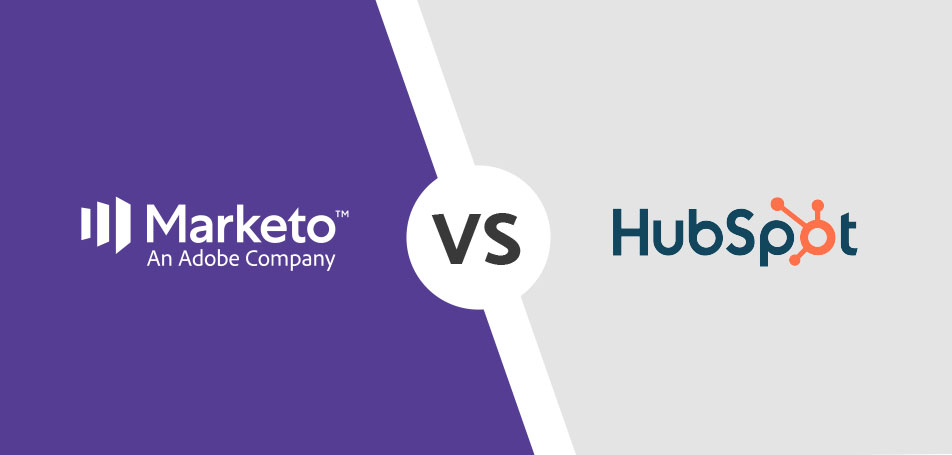
If you’ve been looking for marketing solutions and upgrades, you’ve most likely heard of Adobe Marketo and Hubspot. These powerful tools have highly valuable marketing capabilities, and both have received high ratings from their respective users. However, although these brands both share the same goal, the tactics and strategies they employ to achieve these goals are quite different.
Since Adobe Marketo and Hubspot have such contrasting approaches to marketing, it’s essential to break down the core differences between the two before you can determine which one would be most valuable to your company. To help you decide, we compared 7 core aspects of marketing automation to see where each platform excels—or falls flat. Here’s what we found:
Ease of Use
Hubspot is designed to be an all-in-one platform that anyone can use. It’s incredibly user-friendly, so even small business owners can learn how to make the most out of the range of features the software includes. But although Hubspot has a more intuitive layout and covers a large percentage of the tools every modern marketer needs, Marketo is undeniably more powerful.
Marketo is aimed towards larger organizations and enterprises that need advanced tools to meet their business goals. The software is more complex and typically requires someone knowledgeable about the technical aspects to set it up and monitor it every day. However, the added complexity equates to stronger tools, further customization options, and more advanced marketing possibilities.
CRM Integration
CRM, or customer relationship management, is often a key focus for most marketers. Hubspot created a built-in CRM that users can utilize at no extra cost, or people can choose a compatible integration with systems like Salesforce, Microsoft Dynamics, or SugarCRM.
Marketo doesn’t feature a built-in CRM system, but it could potentially have the best Salesforce integration since it was built using the Salesforce platform. Marketo also offers plenty of integrations, including some incredibly powerful tools from Adobe.
Email Marketing
Marketo is best known for its outstanding email automation processes and features. Users can easily set up email chains triggered by specific actions, conduct A/B testing, and create long email marketing campaigns. Marketers can even use predictive analytics to gauge possible trends based on customer behaviors or other patterns!
Hubspot makes it easy to create email templates and deploy email tracking, which will allow you to see when customers open emails and what action they take afterward. Hubspot’s overall email design is easier to use than Marketo’s, and the ability to reach specific customer segments with different campaigns is a big plus.
Campaign Management
Marketo and Hubspot both allow marketers to “clone” successful marketing campaigns that worked for them in the past, which can save enormous amounts of time. Marketo’s campaign management features make it easy for businesses to monitor their current campaigns in real-time, view their assets, and coordinate tasks for each member of the marketing team.
Hubspot seems to portray the bigger picture when it comes to monitoring current campaigns. Users can view metrics based on specific dates or contacts, but more in-depth views of the marketing efforts aren’t available until the campaign has ended.
Analytics
Marketo’s Marketing Analytics application includes an array of tools to show correlations between revenue and marketing efforts, behavior patterns, content, and all kinds of other data. Instead of spending time agonizing over the data of your campaign, Marketo will show you all the information you need, in as much detail as you require.
Hubspot’s Campaign Analytics tool can give you an overview of the most important metrics of your marketing campaign, including revenue, sessions, influenced deals, and new and influenced contacts. However, it’s more comprehensive in nature and lacks the deeper analytical capabilities of Marketo.
Social Media
You can’t discuss marketing automation without addressing social media! Both Marketo and Hubspot have social media tools that can share content across all of your pages, “listen” for any relevant mentions of your brand and monitor the activity of your followers and potential leads. However, Marketo requires additional integrations or modules in order to gain these features, whereas Hubspot’s social capabilities are built in.
Lead Nurturing
According to Fit Small Business, Marketo calls its lead nurturing process the “engagement engine.” It can identify and score leads by analyzing everything from user behavior to demographics, or any other criteria you’d like to monitor. Marketo’s process can also be set up to trigger specific marketing actions based on behaviors taken by the individual.
Hubspot focuses on nurturing leads based on user activities, such as clicking on specific pages, opening emails, or submitting forms. One advantage it has over Marketo is that it automatically includes information about potential leads into the built-in CRM module, making it simple for salespeople to personally connect with prospects.
Conclusion
Ben Green, the director of operations at Oktopost, writes that “The choice between both platforms is a classical all-in-one vs. best-in-breed decision.” Marketo is often a better choice for enterprises or B2B companies that need a flexible and customizable marketing platform with deep analytical capabilities. Hubspot, on the other hand, is more accessible to small and mid-size businesses that are looking for simple software with a number of built-in functionalities.
Once you determine what your primary business goals are, you’ll be able to confidently select the marketing automation tool that’s right for you.