
 Manufacturing and Distribution
 Firearms
 Automotive and OEMs
 Healthcare & Life Sciences
 Sports & Outdoor Hunting Gear
 Regulated Industries eCommerce
 Adobe Commerce
 BigCommerce
 Magento
 myMagento
 WooCommerce
 Shopify Plus
 Shopware
 Magento 1 to Magento 2 Migration
 Magento Upgrade Service
 Magento Design
 Magento B2B
 Magento Hosting
 Magento Consulting
 Magento eCommerce Developers
 Magento SEO
 Magento Integration
 Magento Speed & Performance Optimization
 eCommerce Development
 Headless Commerce
 eCommerce GrowthX
 B2B CRO Services
 Enterprise SEO Services
 Email Marketing
 Website Localization Services
 AEO, GEO and AI Search
 AI Tools for Business
 Data Analytics Services
 GrowthX Strategy & Consultancy
 eCommerce Integration
 CRM Integrations
 Accounting Software Integrations
 ERP Integrations
 PIM Integrations
 Payment Gateways Integrations
 Tax Platform Integrations
 eCommerce Site Migrations
 Project Rescue
 Hire Developers
 Free Audit Report
 Extensions & Applications
 Custom Applications for eCommerce
 Magento Extensions
 Security & Fraud Prevention
 User Interface & Experience
 Website Design Services
 Support & Maintenance
 About Us
 Blog
Blog Webinars
 News & Updates
 Downloads
 FAQs
FAQs The Wagento Difference
 Hyvä
Hyvä iPaaS
iPaaS Klaviyo
 Sales Layer
 Sift
Sift Dot Digital
 Nousmedis
 Call
Call Message
Headless Commerce Development Agency & Services
Freedom to scale
Headless eCommerce separates your frontend experience from backend systems, giving businesses complete flexibility over design, performance, and integrations. It enables faster innovation, better customer experiences, and long-term scalability across channels and devices.






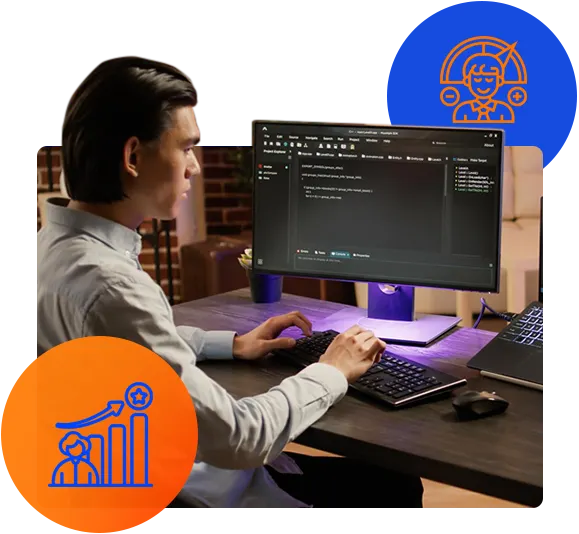
Headless by Design, Powerful by Choice
Customer expectations continue to evolve across websites, mobile apps, marketplaces, and emerging digital channels. Traditional monolithic platforms often limit how quickly businesses can adapt to these changes.
Headless eCommerce removes these constraints by allowing teams to build and optimize customer experiences independently of backend systems. This enables faster page speeds, greater personalization, and more consistent omnichannel experiences.
For growing businesses, headless architecture provides the flexibility to innovate without disrupting core operations, making it a strategic foundation for long-term digital growth.
Break Free from Template Thinking
Headless eCommerce uses APIs to connect frontend experiences with backend commerce systems.
Product data, pricing, inventory, orders, and customer information are delivered through secure interfaces to websites, apps, and other digital touchpoints. This allows developers to use modern frameworks and technologies while maintaining a stable commerce core. Frontend and backend teams can work independently, enabling faster development cycles, easier updates, and more resilient systems.
The result is a modular, composable architecture designed for continuous improvement.

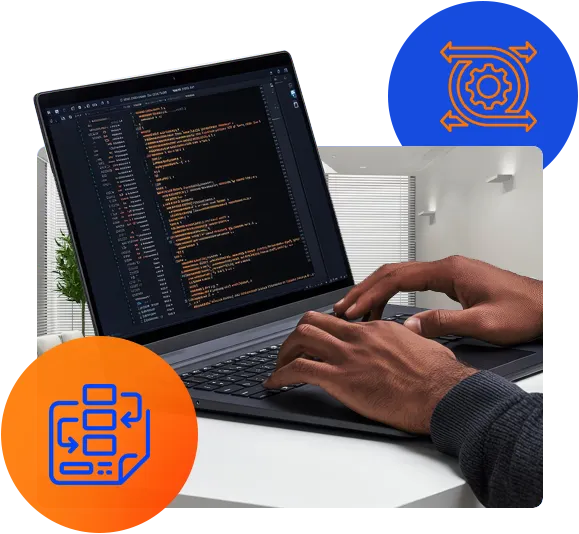
Create Freely with Headless Commerce
Many businesses struggle with implementation complexity, integration gaps, performance tuning, and long-term maintenance when adopting headless commerce.
Without proper planning, teams may face fragmented systems, rising technical debt, and inconsistent customer experiences. We address these challenges by designing scalable architectures, clear integration layers, and sustainable development workflows.
Our approach balances flexibility with operational stability, ensuring headless solutions support growth without creating unnecessary technical risk.
Where Technology Stops Holding You Back

Decoupled frontend and backend systems
Build custom storefronts and digital experiences without being limited by backend platform constraints.

API-first integration architecture
Connect commerce, CMS, PIM, CRM, and other systems through flexible, secure APIs.

Omnichannel experience delivery
Power websites, mobile apps, kiosks, and marketplaces from a single commerce backend.
Technologies Powering Headless Commerce
Our headless commerce development services use modern frontend frameworks and composable technologies that deliver speed, flexibility, and scalability. We build high-performing storefronts that connect seamlessly with Adobe Commerce, Magento, Shopify, BigCommerce, and SCAYLE backends.

React & Next.js Frontends
Build fast, scalable, SEO-friendly storefronts using React and Next.js.

Vue Storefront & PWA Studio
Create app-like shopping experiences with faster load times and improved engagement.

API-First & Composable Architecture
Enable flexible integrations with ERP, PIM, CRM, and third-party systems.

GraphQL & Headless APIs
Fetch precise data efficiently for faster performance and seamless system communication.

Content Management Systems (CMS) Integration
Manage content independently using headless CMS for faster updates and personalization.

Edge Computing & CDN Optimization
Deliver ultra-fast global performance with reduced latency and consistent user experiences.
Build Commerce without Limits
Design a headless eCommerce architecture that delivers speed, flexibility, and long-term growth.


Headless Commerce Across Leading eCommerce Platforms
Headless commerce is not limited to a single platform. Leading eCommerce solutions like Adobe Commerce, Magento, Shopify, BigCommerce, and SCAYLE support headless architecture, enabling businesses to deliver faster, flexible, and highly customizable storefront experiences across channels.

Headless Commerce with Adobe Commerce
Leverage Adobe Commerce’s robust backend with headless architecture to deliver enterprise-grade performance, advanced personalization, and seamless integrations across complex B2B and B2C ecosystems.

Shopify Plus Headless Commerce
Combine Shopify’s backend with modern frontend frameworks to create fast, mobile-first storefronts while maintaining ease of use and rapid deployment.

SCAYLE Headless Commerce
Build high-performance, enterprise-grade headless solutions with SCAYLE, designed for scalability, composable architecture, and seamless omnichannel commerce experiences.

Headless Commerce with Magento
Use Magento Open Source with a headless approach to build flexible, scalable storefronts while maintaining control over custom features, integrations, and user experience.

BigCommerce with Headless
Utilize BigCommerce’s API-first architecture to power headless storefronts, enabling faster performance, multi-channel selling, and flexible integrations with third-party systems.
Headless Commerce with Adobe Commerce
Leverage Adobe Commerce’s robust backend with headless architecture to deliver enterprise-grade performance, advanced personalization, and seamless integrations across complex B2B and B2C ecosystems.
Headless Commerce with Magento
Use Magento Open Source with a headless approach to build flexible, scalable storefronts while maintaining control over custom features, integrations, and user experience.
Shopify Plus Headless Commerce
Combine Shopify’s backend with modern frontend frameworks to create fast, mobile-first storefronts while maintaining ease of use and rapid deployment.
BigCommerce with Headless
Utilize BigCommerce’s API-first architecture to power headless storefronts, enabling faster performance, multi-channel selling, and flexible integrations with third-party systems.
SCAYLE Headless Commerce
Build high-performance, enterprise-grade headless solutions with SCAYLE, designed for scalability, composable architecture, and seamless omnichannel commerce experiences.
Headless Commerce vs Traditional Commerce
Choosing between headless and traditional commerce depends on your business needs, scalability goals, and development flexibility.
Headless Commerce
Flexible, API-driven, high-performance commerce architecture
Full control over frontend experiences
High performance with faster load times
Extensive customization capabilities
Faster innovation and iteration cycles
Highly scalable for growing businesses
Decoupled architecture (frontend + backend)
API-first, flexible integrations
Built for omnichannel experiences
Greater developer control and flexibility
Flexible but requires technical expertise
Optimized for SEO and performance
Advanced personalization capabilities
Independent frontend/backend updates
Ideal for complex and enterprise use cases
Traditional Commerce
Monolithic, limited flexibility, slower to scale
Limited frontend flexibility
Moderate performance
Restricted customization
Slower due to platform dependencies
Limited scalability at scale
Monolithic, all-in-one architecture
Limited, platform-dependent integrations
Requires additional setup for omnichannel
Constrained by platform limitations
Easier to manage but less flexible
Limited optimization capabilities
Basic or plugin-based personalization
Full system upgrades required
Better suited for simpler setups
Testimonials
Hear From Our Satisfied Clients
Hear from clients about working with us; don’t take our word for it.


Wagento consistently rises to the challenge. They translated our vision into a stunning website, and their ongoing development support keeps the experience seamless for our clients and retailers. Partha and his team handle requests with speed and real attention to detail.
Amanda Pehrson
Digital Marketing Manager, Hyde Park Jewelers

Working with Miguel and the Wagento team has been integral to our site transition. We appreciate the open communication and the dedication to helping us customize our site while staying on track. We could not have launched without them.
Marie Whelan
Digital Marketing Manager, SERRV International

When we needed to migrate to Magento 2, we turned to Wagento. They did an excellent job, allowing us to maintain our competitive edge with the latest technology and virtually no downtime during the transition.
Ron Salmon
Owner, Bus Depot, Inc.
FAQs
Answers to common questions about headless eCommerce, flexibility, performance, and scalable digital experiences.
Frequently Asked Questions About Headless Commerce
Headless commerce separates the frontend and backend, allowing businesses to deliver faster, more flexible, and highly customizable digital experiences across multiple channels. By using APIs, the frontend communicates with the commerce engine independently, enabling faster page loads and better performance. This approach supports omnichannel strategies across web, mobile apps, and other digital touchpoints. It also allows teams to innovate quickly without being limited by traditional platform constraints.