
 Manufacturing and Distribution
 Firearms
 Automotive and OEMs
 Healthcare & Life Sciences
 Sports & Outdoor Hunting Gear
 Regulated Industries eCommerce
 Adobe Commerce
 BigCommerce
 Magento
 myMagento
 WooCommerce
 Shopify Plus
 Shopware
 Magento 1 to Magento 2 Migration
 Magento Upgrade Service
 Magento Design
 Magento B2B
 Magento Hosting
 Magento Consulting
 Magento eCommerce Developers
 Magento SEO
 Magento Integration
 Magento Speed & Performance Optimization
 eCommerce Development
 Headless Commerce
 eCommerce GrowthX
 B2B CRO Services
 Enterprise SEO Services
 Email Marketing
 Website Localization Services
 AEO, GEO and AI Search
 AI Tools for Business
 Data Analytics Services
 GrowthX Strategy & Consultancy
 eCommerce Integration
 CRM Integrations
 Accounting Software Integrations
 ERP Integrations
 PIM Integrations
 Payment Gateways Integrations
 Tax Platform Integrations
 eCommerce Site Migrations
 Project Rescue
 Hire Developers
 Free Audit Report
 Extensions & Applications
 Custom Applications for eCommerce
 Magento Extensions
 Security & Fraud Prevention
 User Interface & Experience
 Website Design Services
 Support & Maintenance
 About Us
 Blog
Blog Webinars
 News & Updates
 Downloads
 FAQs
FAQs The Wagento Difference
 Hyvä
Hyvä iPaaS
iPaaS Klaviyo
 Sales Layer
 Sift
Sift Dot Digital
 Nousmedis
 Call
Call Message
ERP Integrations for eCommerce Growth
One system, connected
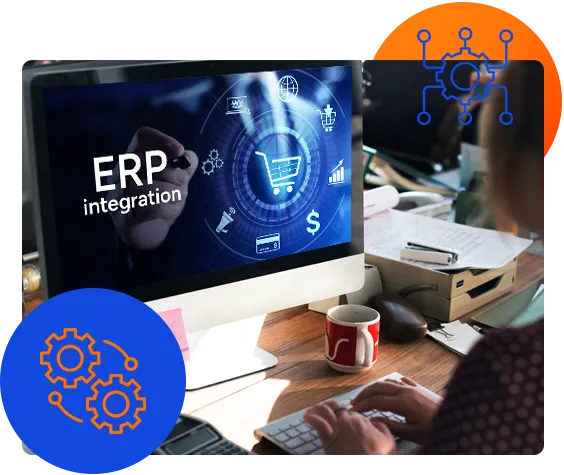
ERP integration for eCommerce connects your storefront with NetSuite, SAP, Microsoft Dynamics, and other core systems, enabling real-time data flow across inventory, orders, finance, and operations. The result is fewer manual processes, better visibility, and scalable growth.








Bring Order to Your eCommerce Operations
As eCommerce operations grow, disconnected systems become a major bottleneck. Without proper ERP integration, teams struggle with inventory mismatches, delayed order processing, pricing inconsistencies, and reporting gaps.
An integrated ERP and eCommerce setup creates a single source of truth across departments. Orders placed online are automatically reflected in the ERP, inventory updates in real time, and financial data stays accurate without manual reconciliation.
This reduces operational risk, improves fulfillment speed, and gives leadership reliable data for decision-making. For B2B manufacturers, distributors, and high-volume businesses, ERP integration is not a nice-to-have, it is the foundation for scale.
Clarity, Control, and Confidence at Scale
ERP integrations for eCommerce work by securely synchronizing data between your online store and ERP systems such as NetSuite, SAP, and Microsoft Dynamics through APIs, middleware, or custom connectors.
Key data points such as products, inventory levels, pricing rules, customers, orders, invoices, and shipments are mapped and exchanged automatically. Integrations can be real-time or scheduled based on business needs. Advanced setups support complex workflows like multi-warehouse inventory, customer-specific pricing, credit limits, and tax handling, whether you sell on Adobe Commerce, Magento, BigCommerce, or Shopify Plus..
A well-architected integration ensures data accuracy, system stability, and flexibility as business processes evolve.
Finally, an Integration That Holds Up
Many eCommerce businesses face challenges such as rigid ERP systems, incomplete APIs, performance issues, and fragile sync processes.
Poorly designed integrations often break during peak traffic, upgrades, or business changes. We address these challenges by designing scalable, fault-tolerant ERP integrations that align with real operational workflows. Our approach focuses on clean data mapping, error handling, monitoring, and future-proof architecture.
Whether you are integrating NetSuite, SAP, Acumatica, or a custom legacy ERP, we ensure your integration supports growth instead of slowing it down.
Move Faster Without Breaking Operations

Real-time order synchronization
Automatically push online orders to the ERP with complete customer, pricing, tax, and payment data for faster and more accurate processing.
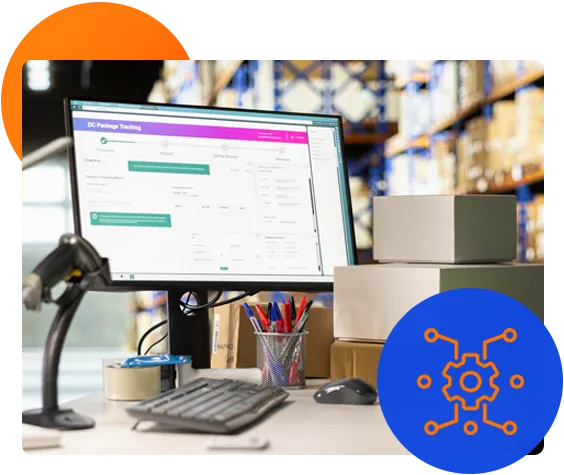
Inventory and warehouse sync
Keep stock levels aligned across warehouses, channels, and locations to prevent overselling and improve fulfillment reliability.

Pricing and customer data mapping
Sync complex pricing rules, customer groups, contracts, and credit limits directly from your ERP to your Adobe Commerce, Magento, or BigCommerce storefront.
Less Manual Work. More Operational Confidence
Build a connected, scalable eCommerce operation with ERP integrations that actually work.


Testimonials
What Our Clients are Saying
Hear from clients about working with us; don’t take our word for it.


Wagento consistently rises to the challenge. They translated our vision into a stunning website, and their ongoing development support keeps the experience seamless for our clients and retailers. Partha and his team handle requests with speed and real attention to detail.
Amanda Pehrson
Digital Marketing Manager, Hyde Park Jewelers

Working with Miguel and the Wagento team has been integral to our site transition. We appreciate the open communication and the dedication to helping us customize our site while staying on track. We could not have launched without them.
Marie Whelan
Digital Marketing Manager, SERRV International

When we needed to migrate to Magento 2, we turned to Wagento. They did an excellent job, allowing us to maintain our competitive edge with the latest technology and virtually no downtime during the transition.
Ron Salmon
Owner, Bus Depot, Inc.
FAQs on ERP Integrations
Answers to common questions about ERP integrations, complexity, scalability, and real-world eCommerce impact.
ERP integration in eCommerce connects your online store with your ERP system to synchronize data such as orders, inventory, pricing, customers, and financial records automatically. This removes manual data entry, reduces errors, and ensures every team works from the same, up-to-date information.