



















Magento continues to stand strong in 2026 as one of the most flexible and powerful ecommerce platforms in the world. Despite constant competition from SaaS platforms and rapid changes across the ecommerce landscape, the Magento platform remains a top choice for enterprises, manufacturers, retailers, and B2B companies that need complete control, customization, and scalability.
This updated report uncovers what the Magento community should expect in 2026, what Adobe Commerce is prioritizing, how Magento Open Source is evolving, and why Magento development, Magento extensions, and Magento support services are still in high demand.
Before we dive into emerging trends and predictions, here is a quick action step for merchants planning growth this year.
Ready to Improve Your Magento Store Performance?
Magento in 2026: Stronger, Smarter, and Future Ready
Magento remains a foundational ecommerce solution for businesses that need more than an out-of-the-box storefront. The combination of open architecture, global developer talent, and enterprise scale continues to keep Magento relevant as the industry shifts toward AI and composable ecosystems.
Below is a breakdown of the most important updates defining the future of the Magento platform.
The Magento Platform Roadmap for 2026
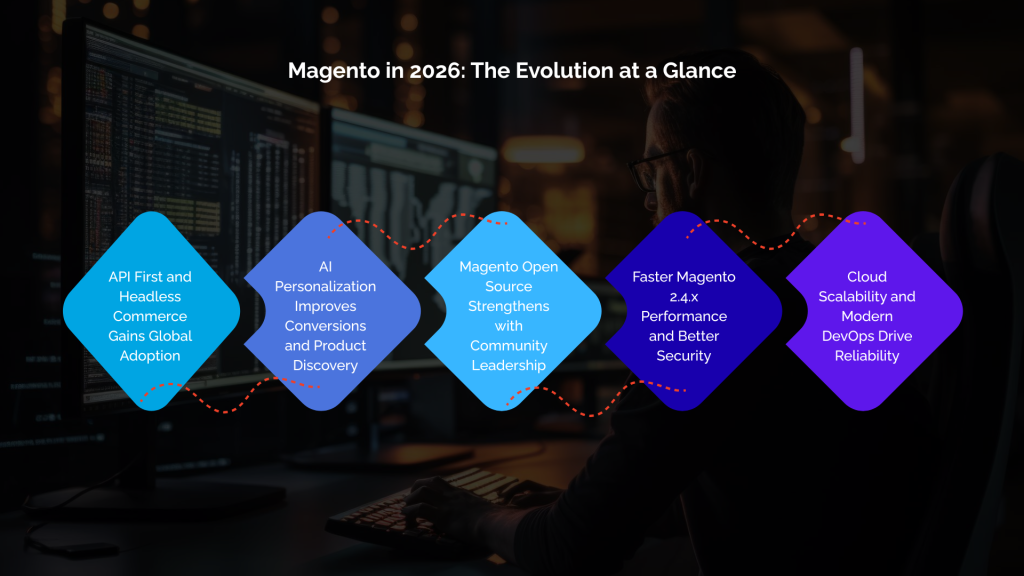
The Magento roadmap in 2026 reflects major investments in performance, AI, headless commerce, cloud flexibility, and merchant experience. These updates impact both Adobe Commerce and Magento Open Source stores across the world.
Recent insights into the Magento roadmap highlight how AI features, cloud scalability, and API first development will shape Magento beyond 2026.
Headless Commerce and API First Development Lead the Way
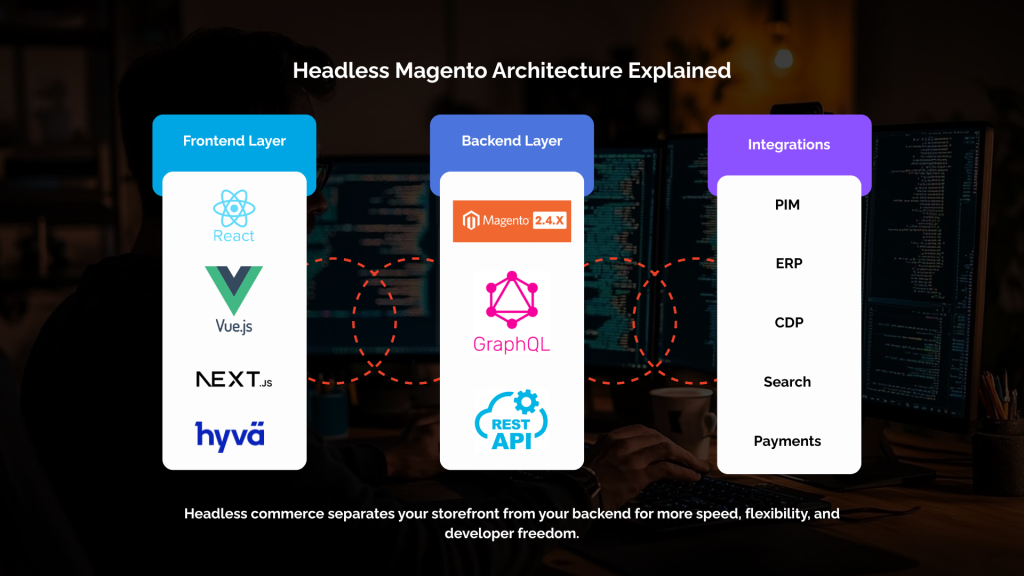
Magento’s architecture continues to shift toward an API first model. This includes:
- Improved GraphQL coverage
- Faster API response times
- Easier integration with modern frontends like React, Vue, Next.js, and Hyvä
Headless commerce is no longer experimental. It is becoming standard for merchants who need freedom to design and optimize the storefront experience without touching backend code.
This creates more opportunities for Magento developers and Magento development agencies since businesses want fully customized frontends built for speed, SEO, and conversion performance.
Modern frontend solutions like Hyvä are helping merchants achieve faster performance while reducing development complexity.
AI and Personalization Become Standard Features
Adobe Commerce continues to expand its AI capabilities. Adobe’s Sensei engine now powers:
- AI product recommendations
- Personalized catalog presentation
- Search intent prediction
- Inventory and forecasting suggestions
- Intelligent merchandising for higher conversions
These AI features require proper setup, which keeps Magento development services in high demand. Many merchants also request custom AI extensions, integrations, or personalization logic tailored to the way their customers shop.
Cloud Performance and Scalability Continue to Improve
The shift toward cloud native architecture provides major improvements in:
- Page load speed
- Deployment automation
- Code scalability
- Disaster recovery
- Security hardening
Merchants running Adobe Commerce Cloud see better performance than ever thanks to optimized cluster coordination and reduced computational overhead.
For businesses running Magento Open Source, cloud hosting partners are offering specialized environments built around Magento’s resource needs. This has also increased demand for Magento support and managed hosting packages that monitor store health, security, and uptime.
Learn directly from Adobe’s official 2025 product roadmap review, highlighting how Adobe Commerce will evolve with new capabilities for both B2B and B2C growth in the coming year.
Magento Open Source Is Strengthened by Community Leadership
Although Adobe focuses heavily on enterprise features inside Adobe Commerce, the Magento community remains dedicated to improving the open-source version.
The community continues to invest in:
- Faster patch releases
- Better developer tools
- Backend performance adjustments
- New extension quality guidelines
Independent groups such as Mage-OS also contribute to the long-term sustainability of Magento Open Source. This ensures the ecosystem stays innovative and merchant friendly.
The Major Platform Updates That Shape Magento Development
Magento 2 continues to evolve with each update cycle. Here are the most important changes shaping the future of Magento development.
Magento 2.4.x Releases Strengthen Stability and Security
Merchants continue to upgrade to Magento 2.4.7, Magento 2.4.8, and beyond. These releases add:
- PHP 8.3 compatibility
- Enhanced security filters
- Expanded GraphQL endpoints
- Performance boosts for checkout and category pages
- Improved accessibility for compliance requirements
Updates also include significant fixes for:
- Inventory performance
- Checkout errors
- Indexing bottlenecks
- Admin panel responsiveness
- Compatibility with leading Magento extensions
This has created a surge in demand for Magento support and long term maintenance contracts.
For merchants planning a smooth upgrade path, this Magento 2 pre-upgrade checklist offers a complete step-by-step guide.
Extension Ecosystem Grows Stronger and More Specialized
Magento extensions in 2026 are more advanced and targeted. The ecosystem offers solutions for:
- AI powered search
- Personalization engines
- Subscription billing
- B2B quoting
- PIM and ERP integrations
- Visual product configurators
- Checkout optimization
Magento developers and Magento development agencies are customizing these extensions to create more personalized ecommerce solutions for merchants that need platform differentiation.
Refer to the official Adobe Commerce release notes for 2025 to stay up to date with the latest platform enhancements, security fixes, and developer improvements directly from Adobe.
To improve conversion rates, many stores focus on checkout optimization using proven Magento 2 customization strategies.
Magento Community Insights for 2026
The heart of Magento has always been its community. The current community insights reflect a healthy ecosystem with strong collaboration across developers, merchants, and agencies.
Magento Events Continue to Expand Worldwide
Events like:
- Magento Association gatherings
- Meet Magento conferences
- Hyvä Developers Paradise
- Community hackathons
are attracting large participation from global developers, designers, and ecommerce teams.
These events reveal strong community interest in:
- Hyvä frontend adoption
- Headless commerce workflows
- AI automation
- Marketplace optimization
- Extension quality standards
The community’s energy continues to be a major factor behind Magento’s long term strength.
Demand for Skilled Magento Developers Remains High
Because Magento is a complex and highly customizable platform, businesses prefer working with certified Magento developers. Skilled developers are essential for:
- Custom module creation
- Checkout flow optimization
- Performance tuning
- Security audits
- Data migration
- API integrations
- Magento 1 to Magento 2 migration
The need for specialized Magento development services will continue to grow in 2026.
Why Magento Still Matters in a SaaS Dominated Market
The ecommerce industry is full of SaaS platforms that offer quick setup and simplified workflows. Despite this, Magento remains the top choice for many mid-market and enterprise merchants.
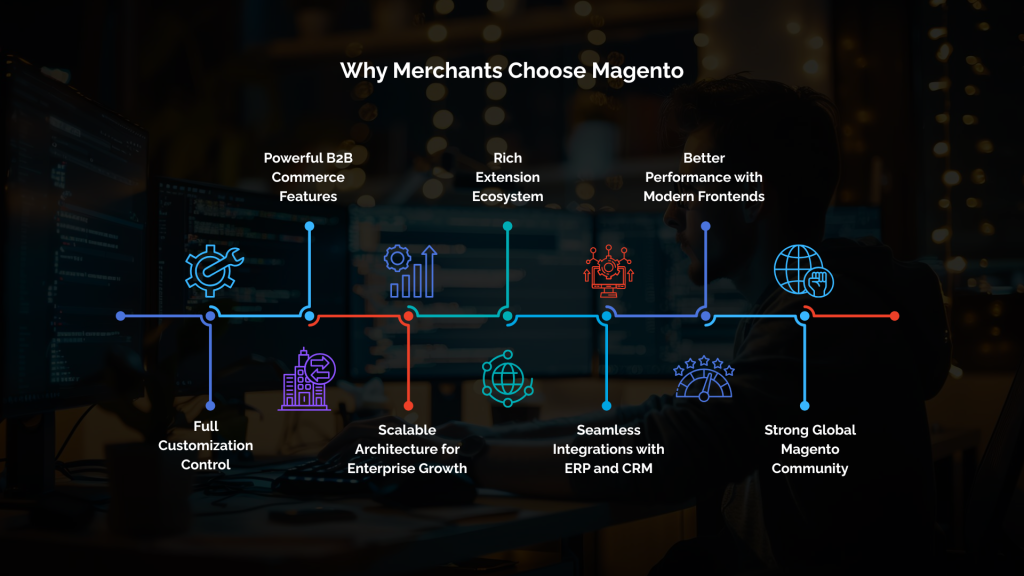
Magento Provides Total Freedom to Build Any Ecommerce Experience
Unlike SaaS platforms, Magento allows:
- Full control over design
- Complete control of backend logic
- Custom development for unique workflows
- Advanced integrations with internal systems
- Personalization at scale
Merchants building complex catalogs, B2B quoting experiences, or multi store environments rely heavily on Magento.
Magento Supports Advanced B2B Features
Magento excels in B2B ecommerce with native features like:
- Custom pricing
- Shared catalogs
- Company accounts
- Quick order forms
- Credit limits
- Purchase approvals
- RFQ workflows
- Multi user roles
Manufacturers and distributors continue to choose Magento because it handles complex processes that SaaS platforms cannot manage without significant custom work.
Need Help Scaling Your Magento Store?
Magento 1 to Magento 2 Migration Still Matters in 2026
There are still thousands of Magento 1 stores that have not migrated. Magento 1 reached end of life in 2020, but many merchants postponed upgrades.
Now in 2026, migration is urgent for security, performance, and compatibility reasons.
Migration Unlocks Modern Magento Capabilities
Upgrading from Magento 1 to Magento 2 unlocks:
- Faster performance
- Modern checkout experiences
- Better security
- AI merchant tools
- Headless commerce possibilities
- Easier extension compatibility
Magento development agencies continue to provide structured migration plans that include data transfers, theme rebuilding, custom module conversion, and testing.
The Growing Importance of Magento Support
Support is becoming as important as development. Merchants want stability, clear reporting, and fast response times.
Top Magento support services include:
- Monthly patching
- Automated store monitoring
- Performance optimization
- Extension compatibility tracking
- Security scanning
- Database health checks
- Hosting environment monitoring
As the platform becomes more sophisticated, expert Magento support is critical for preventing downtime and revenue loss.
What the Future Holds for Magento Beyond 2026
Magento’s future is influenced by three major forces.
AI Will Play a Larger Role in Ecommerce Automation
The combination of Magento’s flexible codebase and Adobe’s AI engine will create:
- Personalized shopping journeys
- Automated merchandising decisions
- Predictive search capabilities
- Smart promotions
- Customer segmentation based on intent
- Inventory forecasting models
Magento developers will increasingly integrate third party AI tools to improve customer experience and operational efficiency.
The Community Will Drive Open-Source Evolution
The Magento community ensures that Magento Open Source continues to evolve even as Adobe prioritizes enterprise features. Community leadership will bring:
- Faster bug fixes
- Storefront improvements
- Community modules
- Performance enhancements
- Better documentation
Open source innovation remains one of Magento’s greatest strengths.
Composable Commerce Will Accelerate Magento Adoption
Composable architecture allows businesses to choose the exact tools they want for search, checkout, catalog management, and personalization. Magento fits perfectly into this model due to its flexible backend and strong API capabilities.
This model is expected to dominate enterprise ecommerce in the next five years.
Upgrade Your Magento Store for the Future
Frequently Asked Questions
What makes Magento a strong ecommerce platform in 2026?
Magento remains strong because it is fully customizable, scalable, and suited for complex ecommerce needs. It supports advanced B2B workflows, headless commerce, AI personalization, and unlimited integration possibilities.
Should I migrate from Magento 1 to Magento 2 this year?
Yes. Magento 1 is unsupported and highly vulnerable. Magento 2 is faster, more secure, and compatible with modern ecommerce extensions and integrations.
Why do businesses still prefer Magento over SaaS platforms?
Magento allows complete freedom to design, customize, integrate, and scale. It is ideal for mid-market and enterprise merchants who cannot rely on cookie cutter ecommerce systems.
How does Magento support help my store perform better?
Magento support ensures your store remains secure, updated, fast, and stable. Regular patching, monitoring, and performance tuning prevent revenue loss and downtime.
What is the future of Magento Open Source?
Magento Open Source is backed by a strong community and continues to evolve. Community driven leadership ensures long term sustainability and innovation for merchants who rely on it.