



















Hiring Adobe Commerce developers is a crucial step for any business aiming to excel in ecommerce. Hire Adobe Commerce developers to complement internal teams and accelerate delivery with ecommerce development experts. Adobe Commerce, formerly Magento, is a leading platform known for its flexibility and scalability. Finding the right talent can significantly impact your ecommerce success and ROI.
Adobe Commerce specialists bring a wealth of expertise to the table. These Adobe Commerce experts are adept at building robust and efficient ecommerce platforms. Their skills in PHP, MySQL, and JavaScript are essential for developing custom solutions.
When you hire ecommerce developers, look for those with a proven track record. Experience with Adobe Commerce’s architecture and customization capabilities is vital. Developers should also be familiar with integrating third-party services and APIs.
Effective communication is key. Developers must understand and implement business requirements seamlessly. They should work collaboratively with designers, marketers, and other stakeholders.
Consider developers who are certified Adobe Commerce professionals. This adds credibility and ensures they are up-to-date with the latest features. Their ability to optimize site performance and ensure security is paramount.
In this guide, we will explore top tips for hiring Adobe Commerce developers. From evaluating portfolios to assessing technical skills, we cover it all. Let’s dive into the world of Adobe Commerce solutions and find the right experts for your business.
Summary
This guide explains how to find, evaluate, and hire Adobe Commerce (Magento) developers who can improve ecommerce performance and ROI. It highlights must-have technical skills, certifications, and integration experience; where to source candidates; and how to assess portfolios, interview effectively, and gauge soft skills. You’ll learn when to choose freelancers, agencies, or in-house teams, how to budget and manage projects, and how to ensure security, performance, and scalability. It also covers onboarding and retention, common pitfalls to avoid, and strategies to future-proof your platform.
Understanding Adobe Commerce and Its Importance in Ecommerce
Adobe Commerce powers many ecommerce sites around the globe. Businesses rely on its flexibility to build tailored solutions. This platform supports a diverse range of industries and business sizes.
Adobe Commerce is renowned for its powerful features. These include out-of-the-box functionalities like product management and marketing tools. Developers can also extend these features to create custom applications.
One standout feature is its scalability. As businesses grow, Adobe Commerce can grow with them. This means merchants can continuously expand their product lines and services.

Security is a top priority for Adobe Commerce. With built-in security tools, businesses can protect customer data. This is crucial for building and maintaining trust with users.
Customization options set Adobe Commerce apart. Businesses can tailor their online store to reflect their brand identity. This enhances user experience and boosts customer engagement.
Let’s consider key reasons to choose Adobe Commerce:
- Scalability: Supports business growth effectively.
- Customizability: Allows comprehensive brand alignment.
- Security: Ensures comprehensive data protection.
- Integration: Seamlessly connects with third-party services.
- Community Support: Offers a vast network of resources and forums.
Integration capabilities make Adobe Commerce even more powerful. It can seamlessly connect with third-party services and APIs. This enables businesses to offer diverse options to their customers.
By understanding Adobe Commerce, businesses can leverage its full potential. Together, these capabilities form robust Adobe ecommerce solutions that scale with demand. Choosing the right development team is the next critical step. Armed with a skilled team, the possibilities in ecommerce are endless.
Key Skills and Qualifications to Look for in Adobe Commerce Developers
Hiring the right Adobe Commerce developer is crucial. Their skills and experience can directly impact your ecommerce success. Here, we explore key qualifications to consider.
Technical Expertise
Adobe Commerce developers must master several technologies. Familiarity with PHP is essential as Adobe Commerce is built on it. Knowledge of MySQL for database management is also critical.
JavaScript proficiency is another must-have skill. It is vital for enhancing front-end functionalities. Developers should also understand HTML and CSS for complete design integration.
Specialized Knowledge
Look for developers with deep insights into Adobe Commerce architecture. This includes understanding its modular framework. Specialization allows developers to customize and optimize your platform.
Experience with APIs and third-party integrations is non-negotiable. As businesses expand, integration with various services is crucial. This capability aids in creating a seamless user experience.
Practical Experience
Prior experience in Adobe Commerce projects is invaluable. Look for evidence of successfully executed ecommerce sites. This shows the developer can handle real-world challenges.
Adobe Commerce developers often need to solve complex problems. This requires innovative thinking and a proactive approach. Evaluate a candidate’s ability to troubleshoot and improve functionalities.
List of Must-Have Technical Skills
- Proficiency in PHP and MySQL
- JavaScript, HTML, and CSS
- Adobe Commerce architecture
- API and third-party integrations
- Performance optimization techniques
Certifications and Credentials
Certifications add credibility to a developer’s resume. Adobe Commerce offers various credentials to validate skills. Consider hiring certified professionals for assured expertise.
Certifications demonstrate a commitment to staying current. They show that a developer is invested in professional growth. This is an indicator of dedication and reliability.
Communication Skills
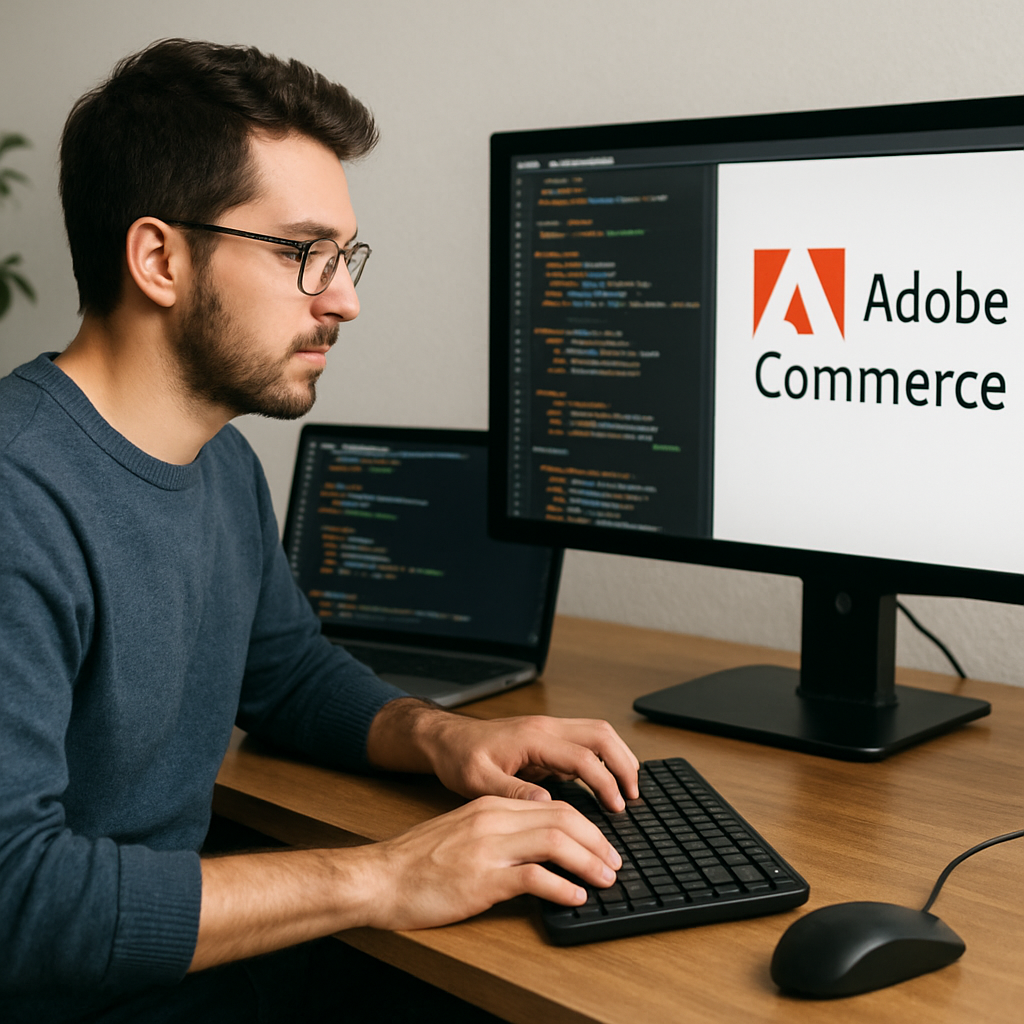
Strong communication is as vital as technical skills. Developers must translate complex concepts for stakeholders. Effective communication helps in delivering project goals effectively.
Coordination with different team members is crucial. Successful projects result from cohesive teamwork. Developers should collaborate well with designers, marketers, and clients.
Problem-Solving Abilities
Evaluate problem-solving and critical thinking skills. Developers often face unexpected challenges. They must adapt quickly to find the best solutions.
Innovation is another vital trait. A developer should bring fresh ideas to the table. This ability can set your ecommerce platform apart.
Desired Non-Technical Qualifications
- Strong communication and collaborative skills
- Certification in Adobe Commerce
- Problem-solving and innovative thinking
- Commitment to continuous learning
- Adaptability and flexibility in projects
Continuous Learning and Adaptation
The digital landscape is constantly evolving. Therefore, developers should demonstrate a willingness to learn. Staying updated with Adobe Commerce trends is advantageous.
By ensuring candidates possess these skills and qualifications, businesses can build robust ecommerce sites. A skilled Adobe Commerce developer brings value beyond the code. Investing in the right talent leads to long-term success.
Types of Adobe Commerce Developers: Front-End, Back-End, and Full-Stack
When hiring Adobe Commerce developers, understanding their specific roles is vital. Developers typically specialize as front-end, back-end, or full-stack. Each has distinct responsibilities and expertise.
Front-End Developers
Front-end developers focus on the user interface. They create visually appealing and interactive web pages. Their work ensures a seamless user experience.
These developers must excel in HTML, CSS, and JavaScript. They also use frameworks like AngularJS or React for dynamic features. Understanding responsive design is crucial for mobile-friendly sites.
Key Responsibilities of Front-End Developers
- Designing user interfaces
- Implementing responsive design
- Enhancing site interactivity
Back-End Developers
Back-end developers handle server-side tasks. They manage databases and server logic. This role is critical for building secure and efficient systems.
Their expertise is in languages like PHP and databases like MySQL. These skills ensure smooth data transactions and integrations. They also focus on the platform’s scalability.
Core Tasks of Back-End Developers
- Managing database interactions
- Ensuring server-side security
- Integrating third-party services

Full-Stack Developers
Full-stack developers bridge the gap between front-end and back-end. They are proficient in both areas, offering versatility. This dual expertise can streamline development processes.
These developers provide comprehensive solutions. They can design interfaces and optimize server performance. Their role is suited for projects needing a holistic approach.
Benefits of Hiring Full-Stack Developers
- Unified development process
- Comprehensive problem-solving
- Flexibility in managing tasks
Choosing the Right Type
Determine your project needs before hiring. Front-end developers excel in user engagement. Back-end specialists ensure robust data management. Full-stack developers offer a comprehensive skill set for diverse projects.
By understanding each type, you can make informed decisions. Selecting the right developer ensures your Adobe Commerce project thrives. This approach maximizes efficiency and improves outcomes.
Where to Find Top Adobe Commerce Specialists
Finding Adobe Commerce specialists can seem daunting. However, numerous platforms and networks can help. These sources can connect you to talented developers.
Online job boards are a great starting point. Websites like LinkedIn and Indeed host numerous job postings. You can filter search results for Adobe Commerce expertise.
Freelance platforms offer diverse options. Websites like Upwork and Freelancer have skilled individuals ready for projects. They allow for flexible hiring arrangements.
Networking events provide another avenue. Conferences and trade shows bring industry experts together. Attendees can connect with skilled Adobe Commerce developers.
Platforms to Discover Adobe Commerce Experts
- LinkedIn for professional networking
- Upwork for freelance hiring
- GitHub for reviewing code samples
- Dribbble for design-specific talent

Tech forums are excellent for finding knowledgeable specialists. Websites like Stack Overflow and Reddit let you seek recommendations and advice. Often, experienced developers contribute to discussions on these platforms.
Word-of-mouth referrals can be powerful. Ask peers within your industry for their suggestions. A trusted recommendation can lead to quality hires.
Professional agencies can simplify the search process. They often have a roster of vetted Adobe Commerce developers. These agencies handle the recruitment process, saving you time. Many brands also choose to hire commerce developers through niche job boards or specialized agencies to fill targeted skill gaps.
By exploring various channels, you can find ideal candidates. Each option has unique advantages. Choose methods aligning with your business needs to discover top Adobe Commerce talent.
Evaluating Portfolios and Past Projects
Assessing a developer’s portfolio is crucial. It provides insights into their skills and experience. A well-rounded portfolio highlights diverse projects.
Look for complexity in completed projects. This indicates problem-solving abilities. Complex projects also demonstrate experience with advanced features and integrations.
Quality over quantity matters here. A few well-executed projects are better than many mediocre ones. Each project should showcase specific strengths.
Key Portfolio Elements to Consider
- Variety of ecommerce solutions
- Use of modern technologies
- Evidence of custom developments
- Demonstrated ability to optimize performance

Examine the usability of showcased projects. User-friendly interfaces and efficient navigation are essential. They reflect understanding of client and end-user needs.
Pay attention to innovations in the portfolio. Unique solutions to common problems are valuable. Creativity in customization highlights adaptability.
Consider feedback from past clients if available. Testimonials provide real-world validation of the developer’s expertise. They can highlight strengths and punctuality.
Ensure any portfolio contains examples relevant to your industry. Specialized industry knowledge can be a significant advantage. This relevance can enhance the success of your ecommerce platform.
Reviewing a developer’s past work is essential in selecting the right hire. It demonstrates their capabilities and compatibility with your business needs. Make informed decisions by thoroughly evaluating their previous projects and innovations.
The Importance of Adobe Commerce Certifications
Certifications serve as a testament to a developer’s knowledge. They validate skills, ensuring that Adobe Commerce standards are met. Certified professionals are often more trusted by employers.
Certified developers understand the intricate Adobe Commerce architecture. They can effectively utilize the platform’s capabilities. This can lead to more innovative and efficient solutions.
Benefits of Hiring Certified Developers
- Demonstrated proficiency in Adobe Commerce
- Up-to-date with the latest features and updates
- Proven commitment to professional development
- Increased likelihood of quality project delivery

Certification can differentiate candidates in a competitive field. It shows a commitment to the craft and continuous learning. Employers see it as an investment in a reliable expert.
Relying solely on certification is not advised. Experience and proven track records also matter. A balance of certification and practical experience can be ideal.
Certified developers are likely to follow best practices. These include performance optimization and security measures. This ensures a more robust and secure ecommerce platform.
Recognize that certifications require regular updates. Developers must stay informed about new Adobe Commerce features. This keeps their skills relevant and effective.
Employing certified Adobe Commerce developers can lead to better project outcomes. It offers a layer of assurance regarding their competency. However, it should complement other hiring criteria for best results.
Interviewing and Assessing Ecommerce Development Experts
Conducting effective interviews is key to hiring success. Preparing relevant questions ahead of time is essential. This ensures you assess the right skills and expertise.
Start the interview by discussing the candidate’s experience. Ask about their past projects and roles. Understanding their journey gives insight into their capabilities.
Technical Skills Assessment
Focus on their technical skills. This includes understanding of:
- PHP, MySQL, and JavaScript
- Adobe Commerce’s architecture and customization
- Third-party integrations and API use
Ask them to share technical challenges they’ve faced. How they solved complex issues is revealing. Look for problem-solving abilities and innovation.

Incorporate practical tests in the interview. These can demonstrate real-world skills. Simulating tasks on Adobe Commerce platforms can be very telling.
Key Questions to Consider
- How do you handle tight deadlines?
- Can you share a time you improved a site’s performance?
- What is your approach to securing ecommerce platforms?
- How do you prioritize tasks in complex projects?
Dive into how they approach project requirements. Do they engage with stakeholders? Strong communicators can navigate challenges more effectively.
Soft skills should not be overlooked. The ability to communicate well is crucial. This helps in implementing business requirements smoothly.
Cultural fit is another vital consideration. Discuss company culture and values. Ensuring alignment can lead to smoother collaboration.
Don’t forget to check references after the interview. Past client feedback can provide validation. It ensures they have delivered quality work before.
Lastly, be transparent about your expectations. Discuss timelines, deliverables, and processes. Clear communication from both sides facilitates better outcomes.
Essential Technical Questions to Ask When You Hire Ecommerce Developers
Hiring the right ecommerce developers requires asking pertinent technical questions. These questions help assess their true expertise. Each question should align with your project’s specific needs.
Understanding Core Technical Skills
Begin by exploring their fundamental tech skills. This is vital to gauge their foundational knowledge. Ask:
- How do you approach debugging issues in Adobe Commerce?
- What are your preferred tools for performance optimization?
Understanding their experience with Adobe Commerce’s architecture is key. A deep grasp of customization is essential. Ask about their experience with adapting this platform.
Probe into their familiarity with integrations. Ask about past experiences integrating third-party services. This reveals their ability to enhance ecommerce functionality.
Discuss their comfort with database management. Handling complex queries in MySQL can be a daily task. Ask them to describe their process when managing large data sets.
Problem Solving and Innovation
Problem-solving skills are crucial for ecommerce developers. Here’s how to dig deeper:
- Can you describe a challenging problem you’ve solved in Adobe Commerce?
- What innovative solutions have you brought to past projects?
Their answers reflect their capacity for innovation. See how they utilize creative thinking to solve complex issues.
Inquire about how they manage and implement security measures. Security is paramount in ecommerce platforms. Ask:
- What steps do you take to safeguard customer data?
- How do you ensure compliance with security standards?
Real-World Application
Real-world scenarios provide insight into their practical skills. Tailor your questions around actual tasks they might face:
- How do you handle scaling the platform as user traffic grows?
- Can you explain your process for integrating a new payment gateway?
Explore their approach to multi-store and multi-language functionalities. Ask about prior work managing diverse ecommerce environments. This will indicate if they can support your global expansion plans.
End the interview by discussing future trends. Developers with a forward-thinking mindset are valuable. Ask:
- How do you keep updated with Adobe Commerce’s latest features?
- What new technology excites you in ecommerce development?
Their response shows their commitment to continuous improvement. It is crucial for long-term success. By the end of your questioning, you should have a clear picture of their technical abilities. This approach ensures you’re hiring a competent, forward-thinking developer.
Soft Skills and Cultural Fit: What Matters Beyond Code
When hiring Adobe Commerce developers, their technical prowess is only part of the equation. Assessing soft skills is just as crucial. These skills ensure harmonious integration into your team.
Effective communication tops the list. Developers must articulate technical concepts clearly. This fosters collaboration across departments.
Problem-solving ability is another vital trait. Developers frequently encounter unexpected challenges. Their capacity to think critically aids swift resolution.
Adaptability is crucial in the ever-evolving ecommerce landscape. Developers should adjust to shifting project priorities with ease. This flexibility supports project momentum.
Teamwork cannot be understated. Developers must work well with others. This includes designers, marketers, and even customers.
When it comes to cultural fit, some factors play a significant role:
- Alignment with company values
- Approach to collaboration and teamwork
- Responsiveness to feedback and criticism
Identifying a match in these areas can significantly impact team cohesion.
Consider the developer’s passion for innovation. A drive to explore new ideas is valuable. It can lead to creative solutions and product improvements.

In conclusion, soft skills and cultural fit are pivotal. They determine the quality of workplace interactions. Prioritize them in your hiring process to build a cohesive, productive team. This balance of technical prowess and interpersonal skills ultimately propels ecommerce success.
Choosing Between Freelancers, Agencies, and In-House Adobe Commerce Experts
Deciding between hiring freelancers, agencies, or in-house Adobe Commerce experts is essential for your business. Each option has unique benefits and challenges to consider.
Freelancers offer flexibility. They often work on a project basis. This can be cost-effective for short-term projects.
However, relying on freelancers might lead to availability issues. Their commitment is divided across various clients. This can affect your project’s timelines.
Agencies bring a diverse set of skills. They often have a team of specialists to handle different aspects. This ensures comprehensive coverage for larger projects.
Agencies can sometimes be more expensive. They often require contracts. This might not suit projects with variable needs.
In-house developers provide continuity. They become familiar with your company’s operations. This can lead to more consistent project outcomes.
The costs of in-house staff include salaries and benefits. However, long-term projects benefit from their constant availability.
Consider these factors when making your decision:
- Project size and duration
- Budget constraints and allocations
- Need for specialized skills versus general knowledge

Each choice affects the project management style, too. Freelancers often need less oversight but require clear briefing. Agencies might employ their methodologies, which calls for adaptability. In-house teams align more closely with internal processes. Many organizations first hire commerce developers on a contract basis before committing to full-time roles.
Weigh the pros and cons based on your specific business needs. Every business is unique, so choose wisely. Align your selection with your project’s requirements and company values. This decision can significantly influence the success of your Adobe Commerce development initiatives.
Cost Factors and Budgeting for Adobe Commerce Solutions
Understanding the cost factors involved in Adobe Commerce solutions is crucial. Budgeting requires a clear analysis of both direct and indirect expenses.
Direct costs often include developer salaries or fees. Freelancers and agencies have varied rates. Also, in-house staff entails different cost structures.
Licensing is another significant expense. Adobe Commerce comes in both open-source and enterprise versions. The latter requires a licensing fee.
Don’t overlook hosting costs. Reliable hosting affects performance. This is essential for maintaining a smooth shopping experience.
Security measures are vital. Invest in robust security solutions. This helps to protect both your store and your customers.
Maintenance and updates are ongoing expenses. Technology evolves rapidly. Staying current ensures optimal functionality.
Here’s what to consider when budgeting:
- Developer fees or salaries
- Adobe licensing and hosting fees
- Security and maintenance costs
Budgeting should include a contingency plan. Allocate funds for unexpected expenses. This can safeguard against potential disruptions.

Communication with stakeholders is key. Clearly define your budgetary constraints. This ensures everyone is aligned.
Invest wisely to maximize ROI. Proper budgeting allows for both immediate and long-term success. Tailor your financial plan to align with your business goals.
Budgeting correctly is a strategic approach. It sets the foundation for your Adobe Commerce project. This results in effective resource allocation and project sustainability.
Project Management and Communication Best Practices
Effective project management is crucial for any Adobe Commerce project. It ensures tasks are completed on time and within scope. A clear plan is key to achieving these goals.
Communication is the backbone of successful project management. Maintain open lines with your team and stakeholders. This helps to align efforts towards common objectives.
A defined methodology like Agile or Scrum can enhance efficiency. These frameworks enable flexibility and continuous improvement. They are particularly useful in dynamic ecommerce environments.
Regular meetings are essential. They offer a platform for updates and feedback. Keep them concise to maximize productivity.
Set clear expectations from the outset. Define roles, responsibilities, and deadlines. This minimizes confusion and overlaps among team members.
Technology tools can streamline management efforts. Consider using platforms like JIRA or Trello. They facilitate task tracking and collaboration.
Here’s a checklist for best practices:
- Set clear objectives and timelines
- Hold regular, focused meetings
- Use project management tools
Effective reporting is also critical. Use data and analytics to measure progress. This informs decision-making and course correction if needed.

Documentation should not be overlooked. Keep a record of project milestones and decisions. This serves as a reference for future projects.
Lastly, foster a culture of open feedback. Encourage team members to voice concerns. This promotes transparency and continuous improvement.
By adhering to these best practices, you can ensure your Adobe Commerce project remains on track. Effective management and communication are indispensable for successful outcomes.
Ensuring Security, Performance, and Scalability in Your Ecommerce Project
Security is a top priority in ecommerce. Your customers trust you with their data. Therefore, protecting this information is paramount. Implement robust security measures to prevent breaches.
Performance is equally crucial. Slow loading times can deter customers. Ensure your Adobe Commerce site is optimized for speed. Regular performance audits can help identify and address bottlenecks.
Scalability allows your ecommerce platform to grow. An inflexible system can hinder expansion. Plan for scalability from the beginning. This foresight ensures seamless growth as demands increase.

A multi-layered security approach is advisable. Use firewalls, SSL certificates, and regular security updates. This enhances protection and assures customers.
Performance can be improved through caching and CDNs. These tools distribute content efficiently. They also reduce server load and enhance user experience.
Consider these key actions:
- Regularly update software
- Implement data encryption
- Optimize content delivery
Monitoring tools can provide insights into site performance. Tools like Google Analytics and New Relic offer valuable data. Use these insights to make data-driven decisions.
Finally, plan for traffic spikes. Seasonal sales can increase demand. Ensure your infrastructure can handle such peaks. This avoids potential downtime and lost sales.
By focusing on security, performance, and scalability, you can ensure your ecommerce project not only functions smoothly but also instills customer confidence. A robust platform positions your business for long-term success.
Post-Hire: Onboarding, Training, and Retaining Adobe Commerce Talent
Successfully hiring Adobe Commerce developers is only the first step. Effective onboarding ensures they integrate smoothly into your team. Begin with a comprehensive orientation. This helps new hires understand your company’s mission and values.
A structured training program is essential. Even experienced developers need guidance on your specific setup. Offer resources that cover your workflows, tools, and company culture. This accelerates their productivity.
Create an environment that encourages learning and growth. Adobe Commerce solutions are ever-evolving. Regular training sessions help developers stay ahead of industry trends. This not only improves skills but boosts motivation.

One-on-one meetings are invaluable. They allow you to track progress and address challenges. Open communication fosters a sense of inclusion and support. It’s crucial for retaining talent over time.
Consider these retention strategies:
- Recognize achievements regularly
- Offer career advancement opportunities
- Encourage a healthy work-life balance
Feedback is a two-way street. Encourage developers to share insights. They can often provide valuable suggestions for improving processes and solutions.
Fostering a positive work environment is key to employee satisfaction. Celebrating team milestones builds camaraderie. It shows appreciation and enhances team spirit.
Retention is an ongoing process. Focus on creating pathways for career development. This aligns individual goals with company objectives.
Lastly, evaluate retention efforts regularly. Identify what works and where improvements are needed. A dedicated approach to onboarding, training, and retention ensures your Adobe Commerce developers become integral, long-term contributors to your ecommerce success.
Common Mistakes to Avoid When You Hire Adobe Commerce Developers
When hiring Adobe Commerce developers, certain pitfalls can derail your project’s success. Being aware of these common mistakes can save time and resources.
One major error is disregarding technical expertise. Adobe Commerce specialists need proficiency in PHP, MySQL, and JavaScript. Overlooking these skills can lead to inefficient or flawed solutions.
Another mistake is failing to verify past work. Portfolios and case studies reveal a developer’s true capabilities. Without these insights, you risk hiring someone who overpromises and underdelivers.
Communication is often underestimated. Clear, consistent dialogue between developers and stakeholders prevents misunderstandings. It ensures everyone is aligned with project goals and timelines.

Consider these key mistakes to avoid:
- Neglecting to set clear expectations
- Overlooking cultural fit
- Ignoring the importance of ongoing support
Don’t rush the hiring process. Hasty decisions might lead to incompatible hires. Take the time to conduct thorough interviews and evaluations.
Lastly, do not ignore the significance of cultural fit. Developers must mesh with your team and share your company’s values. This fosters teamwork and drives project success. Avoid these traps to build a strong Adobe Commerce team and ensure your project thrives.
Future-Proofing Your Ecommerce Platform with Adobe Commerce Experts
To ensure your ecommerce platform remains competitive, investing in the right Adobe Commerce experts is crucial. Future-proofing requires a proactive approach, focusing on adaptability and innovation.
Adobe Commerce specialists can leverage the platform’s customizable features. This flexibility allows them to tailor solutions to your unique business needs. Scalability is another key factor. As your business grows, your platform should seamlessly adjust.

Key strategies include:
- Staying updated with Adobe Commerce’s latest features
- Incorporating mobile optimization techniques
- Implementing advanced analytics for data-driven decisions
Keeping abreast of technological advancements is essential. Adobe Commerce experts will continuously improve your site’s performance. They integrate new tools and features as they become available.
Future-proofing also involves understanding market trends and customer expectations. Adobe Commerce developers can create a responsive design that enhances user experience. This ensures your platform remains relevant and engaging.
With the right team, your ecommerce platform will thrive, adapting to changes with ease. It will be equipped to meet future challenges, driving long-term success and maximizing return on investment. A forward-thinking approach with skilled Adobe Commerce developers is a smart move for any ecommerce business.
Conclusion: Maximizing ROI with the Right Adobe Commerce Team
Partnering with adept Adobe Commerce developers can be transformative. The right team not only builds but optimizes your ecommerce platform for robust results. Choosing the right experts directly affects your business’s success and return on investment (ROI).
A skilled Adobe Commerce team ensures seamless functionality, providing a fluid customer experience. This leads to increased engagement and higher conversion rates. Streamlined processes enhance operational efficiency, saving both time and resources.
Consider these benefits your Adobe Commerce team can deliver:
- Enhanced site performance and security
- Scalable solutions that grow with your business
- Custom features tailored to specific business needs
Moreover, the expertise of Adobe Commerce developers offers peace of mind. Knowing your platform can adapt ensures its longevity in a dynamic market. This foresight translates into tangible business gains. In conclusion, investing in the right Adobe Commerce experts is a strategic move, positioning your ecommerce platform for continued success and growth.