

















A performance-driven growth strategy for 2026 built on CRO, SEO, analytics, campaign management, and optimized user journeys
Ready to turn traffic into predictable revenue?
Introduction: Why Traffic Is No Longer the Problem
Most eCommerce businesses are not struggling with visibility. They are struggling with efficiency.
Traffic is coming in through SEO, paid campaigns, marketplaces, and social channels. The real challenge lies in converting that traffic into sustainable revenue. Low conversion rates, declining average order value, high bounce rates, and inconsistent repeat purchases continue to limit growth even for brands with strong demand.
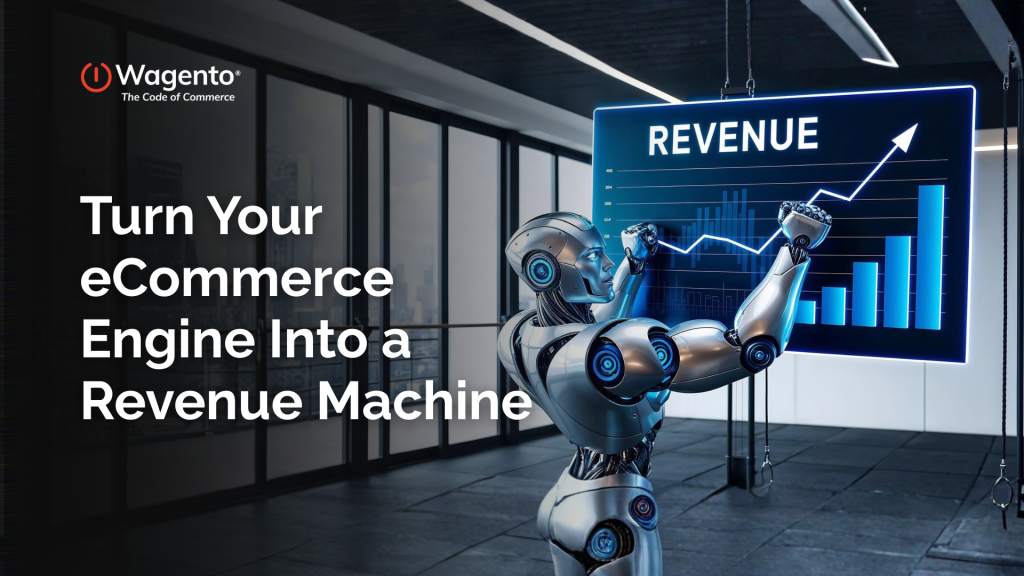
This is why leading eCommerce teams are shifting their mindset. Instead of chasing more traffic, they are focusing on turning their existing eCommerce engine into a revenue machine.
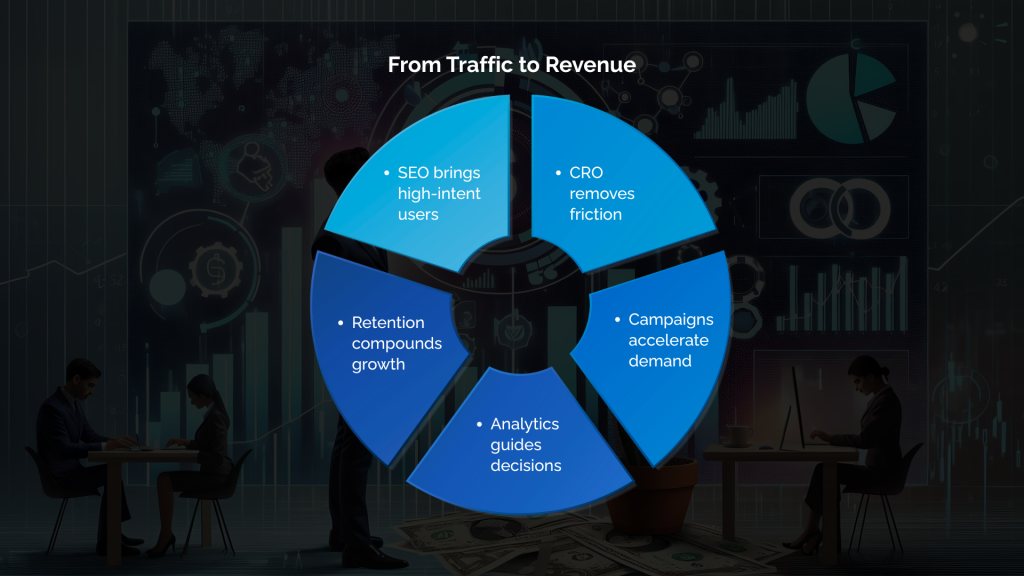
A revenue machine is not powered by a single tactic. It is driven by a performance-focused system that aligns SEO, CRO, campaign management, analytics, and retention around one goal: measurable business growth.
This article breaks down how to build that system in 2026.
What It Means to Build a Revenue-Driven eCommerce Engine
Moving Beyond Channel-Based Marketing
Traditional eCommerce marketing often treats SEO, paid media, email, and CRO as separate efforts. Each channel is optimized in isolation, leading to fragmented data, misaligned priorities, and unpredictable outcomes.
A revenue-driven eCommerce engine connects every channel to the same performance framework. Every action is evaluated based on how it impacts conversion rate, average order value, customer lifetime value, and repeat purchases.
This shift is critical in 2026 because acquisition costs continue to rise while customer expectations grow.
This shift toward performance-first execution is why more brands are adopting growth marketing frameworks that connect experimentation, analytics, CRO, and revenue outcomes. Growth marketing focuses on continuous optimization across the entire funnel, ensuring that every initiative contributes directly to measurable business impact rather than isolated channel success.
Performance Over Activity
Modern growth strategies are not measured by how many campaigns are launched or how much content is published. They are measured by outcomes.
Key performance indicators now include:
- Conversion rate optimization across devices
- Bounce rate reduction on key landing pages
- AOV optimization through merchandising and personalization
- Repeat sales optimization through lifecycle marketing
- Revenue per visitor across channels
Everything feeds into revenue impact.
Building a Data-Driven Marketing Foundation

Why Analytics Is the Core of Growth Marketing
Intuition is no longer enough. High-performing eCommerce brands rely on analytics to guide decisions across marketing, UX, and campaign management.
A strong analytics foundation allows teams to understand:
- Where users drop off in the funnel
- Which traffic sources convert profitably
- Which segments produce repeat purchases
- How changes impact revenue, not just engagement
This is the backbone of any data-driven marketing strategy.
According to Google’s 2025 measurement strategy guidance, businesses that align analytics with real business outcomes rather than vanity metrics gain clearer insight into what drives revenue, where customers drop off, and which optimizations deliver sustainable growth over time.
A strong analytics foundation depends on tracking the right performance indicators. Focusing on key GA4 metrics that directly impact conversion rate, average order value, and revenue growth allows teams to move beyond surface-level reporting and make decisions that improve profitability across the entire funnel.
Key Metrics That Matter
Instead of tracking dozens of vanity metrics, revenue-focused teams prioritize a smaller set of meaningful KPIs:
- Conversion rate by device and channel
- Bounce rate on high-intent pages
- Cart abandonment rate
- Average order value trends
- Customer lifetime value
- Repeat purchase rate
These metrics help identify low conversion rate fixes and low AOV solutions quickly.
SEO as a Long-Term Revenue Engine
eCommerce SEO Services That Drive Sales, Not Just Rankings
SEO is no longer about ranking for high-volume keywords alone. It is about capturing high-intent traffic and guiding it through optimized user journeys.
Effective eCommerce SEO services focus on:
- Category and product page optimization
- Search intent mapping across the funnel
- Content that supports buying decisions
- Technical SEO that improves speed and mobile performance
The goal is to attract traffic that converts.
A winning eCommerce SEO strategy in 2026 goes beyond keyword stuffing and traffic volume. To drive high-intent visitors who convert, you need to implement proven SEO best practices like optimizing URL structure, crafting unique product descriptions, improving site crawlability, and building quality backlinks that improve search visibility and revenue potential. These foundational SEO elements help ensure your organic traffic not only grows but also produces measurable results that feed into your revenue engine. Baslon Digital
SEO and CRO Must Work Together
One of the biggest mistakes brands make is treating SEO and conversion rate optimization as separate efforts.
SEO brings users to the site. CRO ensures those users take action.
When SEO and CRO are aligned, brands see:
- Lower bounce rates from organic traffic
- Higher engagement on category pages
- Improved mobile conversions
- Better revenue per organic visitor
Conversion Rate Optimization as a Growth Multiplier
Why CRO Is Central to Revenue Growth
Conversion rate optimization is one of the fastest ways to unlock growth without increasing acquisition costs.
Even small improvements in conversion rate can lead to significant revenue gains when applied across high-traffic pages.
CRO focuses on:
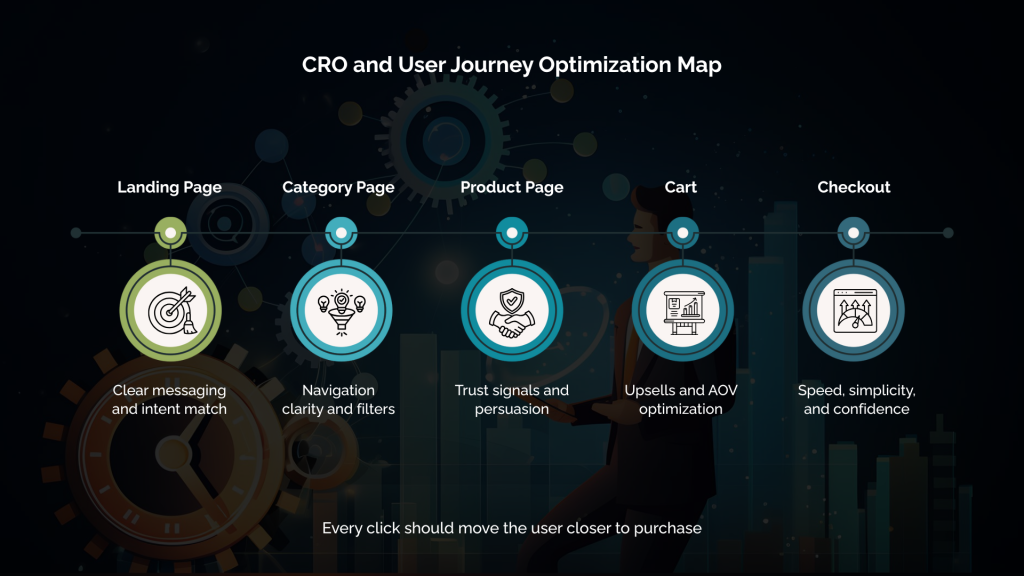
- Reducing friction across the user journey
- Improving trust and clarity
- Optimizing checkout experiences
- Enhancing mobile usability
Bounce Rate Optimization and User Journey Fixes
High bounce rates often signal deeper problems such as mismatched intent, slow load times, or unclear value propositions.
Effective bounce rate optimization includes:
- Improving page load speed
- Aligning landing pages with campaign messaging
- Simplifying navigation
- Enhancing visual hierarchy and CTAs
Every interaction should guide users toward the next step.
Optimizing Average Order Value and Cart Performance
AOV Optimization Strategies That Work
Increasing average order value is one of the most efficient ways to grow revenue.
Proven AOV optimization tactics include:
- Product bundles and kits
- Smart cross-sell and upsell placements
- Threshold-based incentives
- Personalized recommendations
These strategies improve revenue without increasing traffic.
Cart Abandonment Optimization
Cart abandonment remains a major revenue leak for eCommerce brands.
Effective cart abandonment optimization focuses on:
- Simplifying checkout flows
- Offering multiple payment options
- Reducing form fields
- Using recovery emails and remarketing campaigns
Every recovered cart directly increases profitability.
Ready to turn traffic into predictable revenue?
Campaign Management That Drives Performance
Paid Campaign Optimization in a High-Cost Market
Paid media success depends on precision and accountability.
Effective campaign management services prioritize:
- Audience segmentation
- Creative testing
- Funnel-based messaging
- Continuous optimization
Paid campaigns should feed the revenue machine, not drain budgets.
Full-Funnel Marketing Strategy
High-performing brands no longer rely on last-click attribution alone.
A full-funnel marketing strategy ensures:
- Awareness campaigns support demand generation
- Mid-funnel campaigns nurture consideration
- Bottom-funnel campaigns focus on conversion
- Retention campaigns drive repeat sales
Every stage is connected and measured.
Retention, Email, and Repeat Revenue
Customer Retention Strategies That Scale
Acquiring a new customer is significantly more expensive than retaining an existing one.
Retention is a core growth lever.
Effective customer retention strategies include:
- Post-purchase email flows
- Loyalty and referral programs
- Personalized recommendations
- Re-engagement campaigns
Retention turns one-time buyers into long-term revenue drivers.
Email Marketing for eCommerce
Email remains one of the highest-ROI channels when used strategically.
Modern email marketing for eCommerce focuses on:
- Behavior-based automation
- Personalization at scale
- Lifecycle segmentation
- Revenue attribution
Email is not just a communication tool. It is a revenue channel.
AI-Driven and Agentic Marketing Systems
Predictive Analytics for Smarter Decisions
Predictive analytics allows brands to anticipate user behavior and optimize accordingly.
Predictive analytics for eCommerce is used to:
- Forecast demand
- Identify high-value customers
- Optimize inventory planning
- Personalize experiences in real time
AI is no longer limited to recommendations or chatbots. Many eCommerce teams are now applying practical applications of AI in eCommerce growth and optimization to improve personalization, automate campaign decisions, predict customer behavior, and identify revenue opportunities that manual analysis often misses.
Personalization in 2025 has evolved from basic dynamic content to truly contextual experiences that respond to real-time customer behavior and intent, increasing relevance and conversion likelihood. Brands that implement these advanced personalization tactics across channels build deeper, more profitable customer relationships that improve lifetime value and boost repeat purchases. Dotdigital
AI-Driven Growth Marketing
AI-driven growth marketing enables teams to move faster without sacrificing precision.
Key applications include:
- Dynamic personalization
- Automated campaign optimization
- Predictive churn modeling
- Smart content recommendations
Agentic marketing systems help brands scale intelligently.
Bringing It All Together
The Revenue Machine Framework
A true revenue machine integrates:
- SEO for sustainable traffic
- CRO for higher conversion rates
- Campaign management for scalable acquisition
- Analytics for informed decisions
- Retention for long-term growth
Each component reinforces the others.
Growth Is a System, not a Tactic
Winning eCommerce brands do not rely on isolated tactics. They build systems that continuously optimize performance across the entire customer lifecycle.
When strategy, data, and execution align, growth becomes predictable.
Turn your eCommerce engine into a predictable revenue system.
Frequently Asked Questions
What is a data-driven marketing strategy for eCommerce?
A data-driven marketing strategy uses analytics and performance metrics to guide decisions across SEO, CRO, campaigns, and retention to maximize revenue.
How can I reduce eCommerce bounce rate in 2026?
Focus on page speed, message alignment, user intent, and simplified navigation to keep users engaged.
What are the best ways to increase average order value?
Bundling, upsells, personalized recommendations, and threshold-based incentives are among the most effective AOV optimization tactics.
Why is conversion rate optimization so important?
CRO improves revenue without increasing traffic, making it one of the most cost-effective growth levers.
How do AI-driven systems support growth marketing?
AI enables predictive insights, automation, and personalization that help teams scale performance efficiently.