 Manufacturing and Distribution
 Firearms
 Automotive and OEMs
 Healthcare & Life Sciences
 Sports & Outdoor Hunting Gear
 Regulated Industries eCommerce
 Adobe Commerce
 BigCommerce
 Magento
 myMagento
 WooCommerce
 Shopify Plus
 Shopware
 Magento 1 to Magento 2 Migration
 Magento Upgrade Service
 Magento Design
 Magento B2B
 Magento Hosting
 Magento Consulting
 Magento eCommerce Developers
 Magento SEO
 Magento Integration
 Magento Speed & Performance Optimization
 eCommerce Development
 Headless Commerce
 eCommerce GrowthX
 B2B CRO Services
 Enterprise SEO Services
 Email Marketing
 Website Localization Services
 AEO, GEO and AI Search
 AI Tools for Business
 Data Analytics Services
 GrowthX Strategy & Consultancy
 eCommerce Integration
 CRM Integrations
 Accounting Software Integrations
 ERP Integrations
 PIM Integrations
 Payment Gateways Integrations
 Tax Platform Integrations
 eCommerce Site Migrations
 Project Rescue
 Hire Developers
 Free Audit Report
 Extensions & Applications
 Custom Applications for eCommerce
 Magento Extensions
 Security & Fraud Prevention
 User Interface & Experience
 Website Design Services
 Support & Maintenance
 About Us
 Blog
Blog Webinars
 News & Updates
 Downloads
 FAQs
FAQs The Wagento Difference
 Hyvä
Hyvä iPaaS
iPaaS Klaviyo
 Sales Layer
 Sift
Sift Dot Digital
 Nousmedis
 Call
Call Message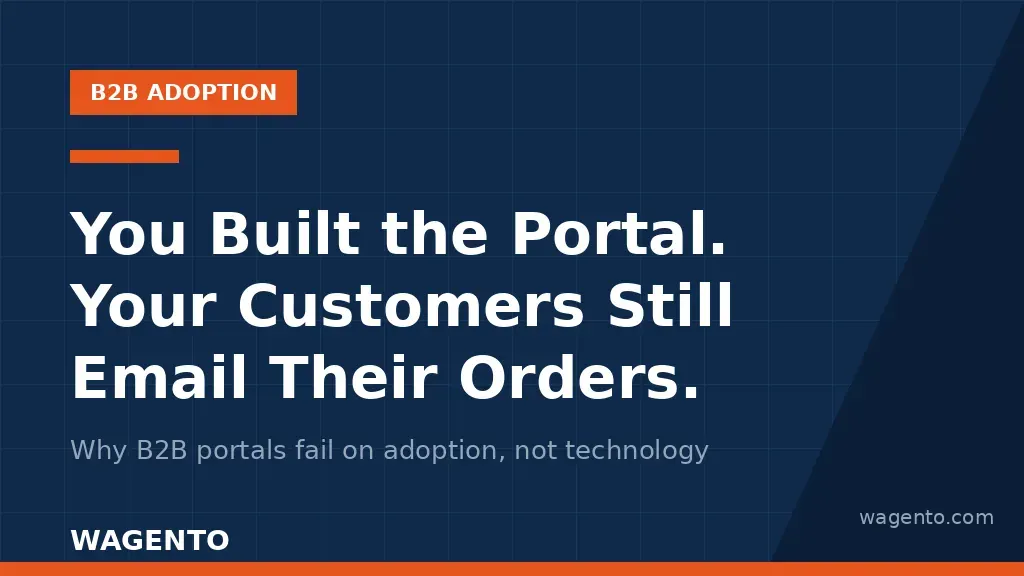
Picture this: Your company just spent six months and a hefty chunk of the annual IT budget developing a state-of-the-art digital portal for customer orders. The user interface is sleek, the product catalogs are perfectly synced, and the checkout process is faster than ever. You launch the portal, send out enthusiastic onboarding emails to your B2B clients, and wait for the automated efficiency to roll in.
A month later, you look at the data. Adoption is sitting at a dismal 15%.
Your inbox, meanwhile, is overflowing. Your best customers are still attaching PDF purchase orders to emails, occasionally sending unstructured Excel spreadsheets, or even pasting their orders directly into the body of an email.
If this scenario sounds familiar, you are not alone. There is a massive disconnect in the B2B world between how sellers want to receive orders and how buyers actually want to place them. You built the portal, but your customers still email their orders because that is the path of least resistance for their internal processes.
To bridge this gap, businesses need to rethink their approach. Instead of forcing clients into a rigid box, modern organizations are turning to a comprehensive purchase order platform that manages both the chaotic influx of customer emails and the structured outflow of their own internal procurement.
In this comprehensive guide, we will explore why portals fail, how to streamline purchase order workflow from inbox to fulfillment, and how upgrading your own internal systems can drastically improve both your sales operations and purchasing efficiency.
The Portal Problem: Why B2B Buyers Cling to Email
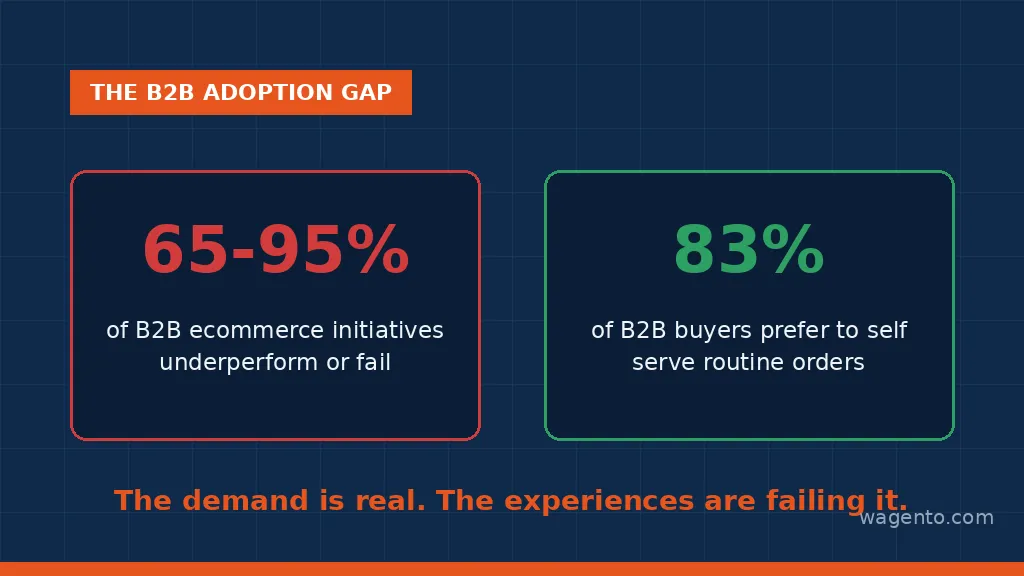
To understand why your beautifully designed portal is gathering digital dust, you have to look at the transaction from the buyer’s perspective.
In the B2C world, a portal makes sense. A consumer logs into a website, adds items to a cart, and checks out. But B2B transactions are entirely different. Your buyers are not individual consumers; they are procurement professionals working for companies that have their own strict internal software ecosystems.
When a B2B buyer needs to purchase supplies from you, they don’t just decide what they want and click “buy.” They have to generate a purchase order within their own Enterprise Resource Planning (ERP) system or procurement software. Once their system generates that official PO, they are expected to send it to the vendor.
If you force them to use your portal, you are asking them to do double data entry:
1. Create the PO in their system to satisfy their internal accounting.
2. Log into your portal, search for the same items, and manually re-enter the order.
Faced with this friction, buyers will inevitably choose the easiest route: they export the PO from their system as a PDF, attach it to an email, and hit send.
This is where traditional customer order management falls apart. When your customer service team receives these emails, they have to manually read the PDF, decipher part numbers, clarify pricing discrepancies, and type the data into your ERP. This manual data entry leads to expensive typos, delayed shipping, and frustrated employees.
Bridging the Gap: What is a Modern Purchase Order Platform?
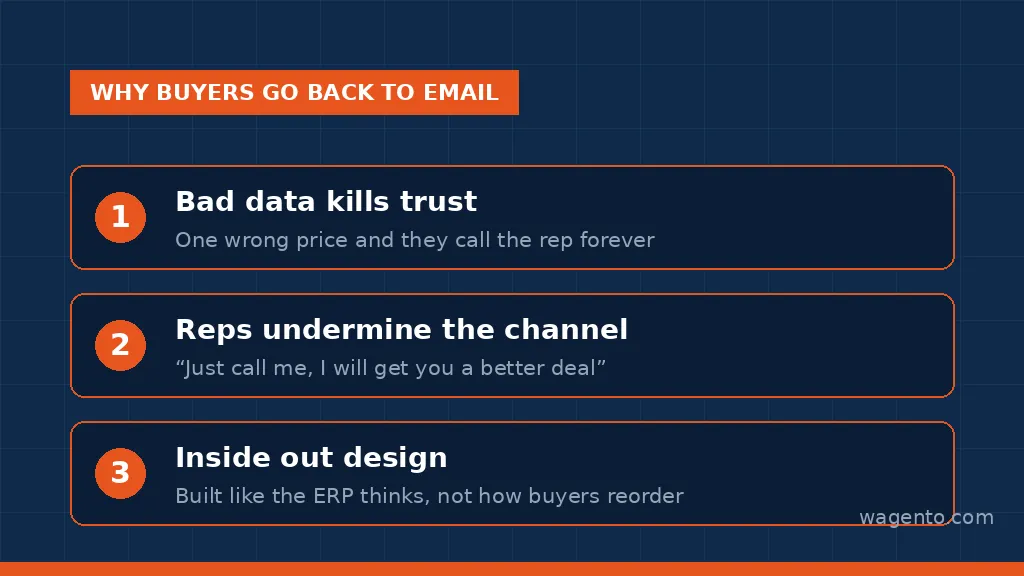
Instead of fighting your customers’ natural behavior, the solution is to adapt to it. This is where a modern purchase order platform comes into play.
A robust purchase order platform acts as an intelligent bridge between your customers’ preferred way of sending orders (email) and your preferred way of processing them (structured ERP data). Rather than relying on a standalone portal for customer orders that no one uses, these platforms utilize Optical Character Recognition (OCR), Artificial Intelligence (AI), and machine learning to “read” incoming emails and attachments.
Here is how an intelligent platform transforms the workflow:
1. Ingestion: The software monitors a dedicated inbox (e.g., [email protected]).
2. Extraction: AI scans the attached PDFs or spreadsheets and automatically extracts critical data—SKUs, quantities, delivery dates, and pricing.
3. Validation: The platform cross-references the extracted data against your ERP to ensure part numbers are accurate and prices match the customer’s specific contract.
4. Integration: The structured, validated data is pushed directly into your ERP as a sales order, ready for fulfillment.
By meeting the customer where they are, you eliminate the friction of forced portal adoption while simultaneously eliminating the manual data entry that slows down your sales team.
Inbound vs. Outbound: The Two Sides of B2B Operations
Order management is a two-way street. While you are struggling with incoming orders from your customers, your own procurement team is likely generating outgoing purchase orders to send to your suppliers.
The ironic truth of B2B commerce is that the same company complaining about customers emailing PDFs is often exporting its own PDFs and emailing them to suppliers. To achieve true operational excellence, you must optimize both sides of the coin. A holistic purchase order platform doesn’t just ingest sales orders; it also manages your internal purchasing.
Before diving into advanced procurement strategies, it is helpful to clarify a foundational concept that frequently confuses non-financial staff during software implementations: the difference between PO and invoice.
• The Purchase Order (PO): This is a document generated by the buyer and sent to the seller. It outlines exactly what the buyer wants, the quantities, and the agreed-upon price. It is a request and, once accepted, a binding contract.
• The Invoice: This is generated by the seller and sent to the buyer after the goods or services have been delivered. It is a demand for payment.
Understanding this distinction is vital because a robust software ecosystem must handle the generation of the PO, the receipt of the goods, and the processing of the subsequent invoice.
Automating Procurement: Escaping the Paper Trap
If your company is still using physical paper, spreadsheets, or disjointed email chains to manage internal buying, you are bleeding money through hidden inefficiencies. The debate between manual vs digital requisition systems has been settled for years, yet many organizations still cling to outdated methods out of habit.
In a manual system, an employee who needs a new laptop or a batch of raw materials fills out a paper form or a spreadsheet. They email it to their manager, who might sit on it for days. Once approved, it goes to the purchasing department, who then has to manually type a PO into the accounting system before emailing a vendor.
Eliminating paper-based purchasing cycles is one of the fastest ways to inject profitability back into your business. When you digitize the process, the automated procurement software benefits become immediately apparent:
• Speed: Requisitions are routed instantly to the right approvers.
• Accuracy: Digitized catalogs ensure employees are requesting the correct items at pre-negotiated prices.
• Visibility: Finance teams can see exactly what is being spent, by whom, and when.
• Control: Budget overruns are prevented before the money is spent, rather than discovered at the end of the month.
By improving purchasing department efficiency, your procurement team transforms from a group of tactical data-entry clerks into strategic negotiators who add bottom-line value.
Essential Features of a High-Performing Procurement System
If you want to know how to streamline purchase order workflow internally, you must look for a platform that offers specific, high-impact features. A modern system is not just a digital filing cabinet; it is an active participant in your financial governance.
1. Seamless ERP Integration
Your procurement software cannot exist in a silo. ERP integration for procurement workflows is an absolute necessity. When a purchase order is approved in your procurement platform, it must automatically sync with your ERP (like SAP, NetSuite, or Microsoft Dynamics). This ensures that your general ledger is always up to date, inventory forecasts are accurate, and your finance team never has to re-key data.
2. Intelligent Approval Workflows
One of the biggest bottlenecks in purchasing is waiting for a manager’s signature. A smart platform allows for complex internal approval hierarchy setup based on your company’s specific rules. For example, you can set rules such as:
• Any purchase under $500 is auto-approved.
• Purchases between $501 and $5,000 require the direct manager’s approval.
• Purchases over $5,000 require approval from the Department Head and the CFO.
• Any IT-related purchase, regardless of price, must be routed to the IT Director for a security review.
When the workflow is automated, approvers get a push notification on their phone or an email with a simple “Approve” or “Deny” button, keeping business moving at the speed of light.
3. The Matching Engine
One of the most critical automated procurement software benefits is the ability to protect your company from overpaying, paying for damaged goods, or falling victim to fraudulent invoices. This is achieved through automated three-way matching.
In manual systems, accounts payable clerks spend hours cross-referencing documents. With a modern platform, the three-way matching process steps are handled digitally:
1. Step 1: The PO. The system logs the original purchase order (what you asked for and the price you agreed to pay).
2. Step 2: The Receiving Report. When the warehouse receives the goods, they log the receipt into the system (what actually arrived).
3. Step 3: The Invoice. The supplier sends the invoice (what they are charging you).
The platform’s matching engine automatically compares these three documents. If the invoice charges $10 per unit, but the PO said $8, the system flags it. If the invoice bills for 100 widgets, but the receiving report shows only 90 arrived, the system blocks payment and alerts your team. This completely eliminates manual auditing for the vast majority of your transactions.
4. Real-Time Financial Dashboards
Historically, finance teams had to wait until the books were closed at the end of the month to understand cash flow. Modern cloud-based spend management tools allow for tracking business expenses in real-time. CFOs can pull up a dashboard and see exactly how much cash is tied up in pending POs, how much is due to be paid out next week, and which departments are nearing their quarterly budgets.
Strategic Wins: Beyond Just “Going Paperless”
Upgrading your purchase order platform is often pitched as a way to “go paperless” or “save time.” While those are valid points, the strategic benefits go much deeper. Implementing these systems fundamentally changes how a business operates, scales, and protects itself.
Slashing Tail Spend
In procurement, “tail spend” refers to the roughly 80% of transactions that account for only 20% of a company’s overall spend. These are the everyday, low-value purchases—office supplies, minor software subscriptions, quick maintenance repairs, and ad-hoc services. Because these purchases are small, they often bypass official procurement channels, leading to rogue spending, missed volume discounts, and decentralized chaos.
Reducing tail spend in small business and mid-market enterprises is incredibly difficult with manual systems. However, with a centralized digital platform, you can funnel all employees through a curated digital catalog. Instead of letting an employee buy printer ink on a personal credit card and expense it later, they simply select the ink from a pre-approved vendor catalog within the software. This consolidates suppliers, ensures you get negotiated rates, and provides total visibility into those pesky smaller expenses that slowly drain profitability.
Enhancing Supply Chain Visibility
In today’s volatile global market, knowing exactly where your materials are is a competitive advantage. Optimizing supply chain visibility starts with a clear, digitized order process.
When your purchase orders are centralized, you can track vendor lead times with surgical precision. You can run reports to see which vendors consistently deliver late, which ones short-ship orders, and which ones have been quietly increasing prices over the last four quarters. This data allows your supply chain managers to proactively seek backup suppliers before a stockout occurs, rather than reacting to a crisis after the fact.
Mastering Vendor Relationships
Strong vendor relationships are built on clear communication and reliable payments. If you are constantly losing invoices, disputing pricing because of lost emails, or delaying payments due to internal routing bottlenecks, your suppliers will view you as a liability. In times of shortage, suppliers prioritize their best, easiest-to-work-with customers.
Digital platforms inherently enforce B2B vendor management best practices. By providing a structured way to issue POs, clear channels for suppliers to submit invoices, and automated matching to ensure they get paid on time, you become a “customer of choice.” Furthermore, some platforms offer vendor portals (which suppliers actually like using for accounts receivable) where they can log in, see the status of their invoices, and check payment dates without having to call your Accounts Payable department.
Bulletproof Compliance and Security
For growing companies, especially those preparing for an acquisition, an IPO, or a stringent external audit, financial compliance cannot be an afterthought. Relying on emails and verbal approvals is a nightmare when auditors come knocking.
A digital platform automatically generates unbreakable audit trails for financial compliance. Every action is time-stamped. If a purchase order was approved, the system records exactly who clicked approve, from what IP address, and at what time. If a budget was overridden, the system requires a justification note that is saved forever. This level of granular documentation ensures compliance with regulations like Sarbanes-Oxley (SOX) and makes internal auditing a breeze rather than a stressful, weeks-long ordeal.
Implementing Cloud-Based Spend Management Tools
The technological shift that makes all of this possible is the cloud. A decade ago, setting up an advanced procurement and inbound order system required heavy on-premise servers, massive IT resources, and years of implementation time. Today, cloud-based spend management tools have democratized access to enterprise-grade technology.
Because these tools are hosted in the cloud, they offer unparalleled scalability. Whether you are processing 100 purchase orders a month or 10,000, the system handles the load effortlessly. Furthermore, cloud platforms provide remote accessibility. A department head traveling for a conference can review and approve an urgent purchase order right from their smartphone, ensuring that the business doesn’t grind to a halt just because key personnel are out of the office.
When selecting a cloud platform, look for solutions that offer robust APIs. This ensures that as your company grows and adopts new software—whether it’s a new CRM, a warehouse management system, or an updated ERP—your purchase order platform can seamlessly integrate with the new tech stack.
The Cultural Shift: Managing the Change
Deploying a new purchase order platform, whether it’s to handle incoming customer orders or outgoing procurement, is not just a technological challenge; it is a cultural one. People are inherently resistant to change.
To ensure a successful rollout, it is crucial to communicate the why behind the change.
• For your customer service team: Show them how the AI-driven inbox ingestion will free them from mind-numbing data entry, allowing them to focus on actual customer relationship building.
• For your employees making purchases: Emphasize how the new digital requisition system means they will get their requested items faster, without having to track down their manager for a physical signature.
• For your finance team: Highlight the peace of mind that comes from real-time visibility and automated three-way matching.
Provide comprehensive training, create easy-to-follow documentation, and celebrate the early wins. When the sales team sees an emailed PDF turn into a structured sales order in seconds, or when the warehouse team realizes they no longer have to decipher handwritten receiving slips, adoption will happen organically.
Conclusion
You built the portal, but your customers still email their orders. That isn’t a failure on your part; it is a reality of the B2B landscape. True business efficiency is not achieved by forcing your customers or your employees into rigid workflows that conflict with their daily realities. Instead, it is achieved by utilizing intelligent technology that bridges the gaps between disparate systems.
By investing in a comprehensive purchase order platform, you can master both sides of the B2B transaction. You can gracefully accept unstructured emails from your clients and magically transform them into structured data for your ERP. At the same time, you can overhaul your internal purchasing, trading slow, paper-based workflows for automated, cloud-based precision.
The result is a holistic transformation of your business operations. Customer order management becomes a silent, automated hum in the background. Purchasing department efficiency skyrockets. Supply chain visibility becomes crystal clear. Ultimately, by meeting your customers where they are and giving your internal teams the modern tools they deserve, you drive faster growth, stronger compliance, and vastly improved profitability.
FAQs
In many B2B environments, the buyer must still create a purchase order in their own ERP or procurement tool for internal controls. If your portal requires them to re-enter the same information, email becomes the fastest workflow because it avoids duplicate entry.